
Introduction
In the year 2026, humans live in a world where the use of artificial intelligence (AI) is common among all people, and the world of reality is under threat. Many people believe that human intuition can serve as a filter between the world of AI and reality. However, research carried out in the past few years indicates that the text, visual and audio inputs that humans relied on are no longer reliable. Research conducted by Nahar et al. (2024) at Pennsylvania State University and Frank et al. (2023) at CISPA Helmholtz Center for Information Security, which varies across China, Germany, and the United States, have shown that human perception in classifying between AI-generated and human-generated content remains limited. Nahar et al. (2024) found that human detection accuracy for AI-generated content stands at approximately 53%, around the same as the chance of flipping a coin, and similar results have been obtained for a range of content types by Frank et al. (2023). (see Figure 1)
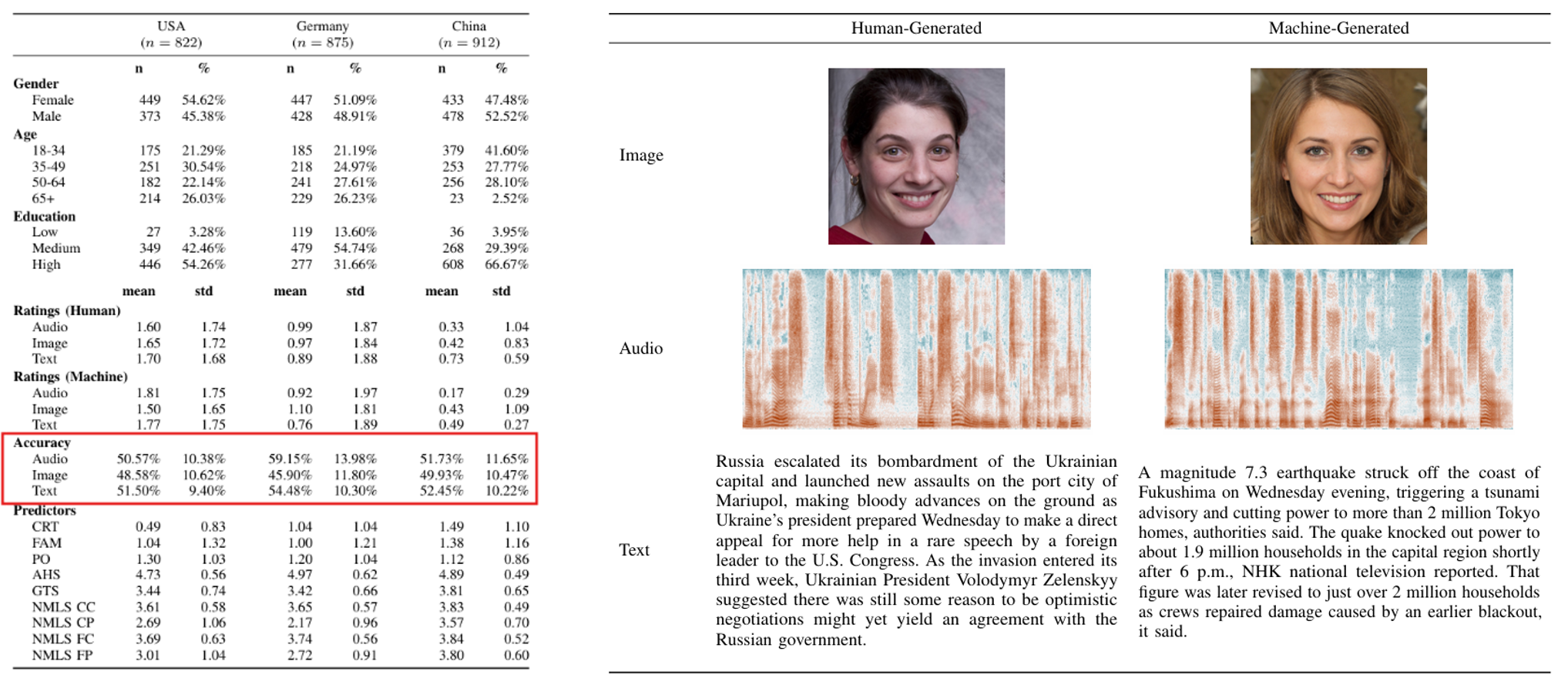
Figure 1: Summary of Dataset Statistics, Participant Metrics, and Research Stimuli Examples
Source: Frank et al. (2023)
The general risk to society in the inability to verify digital content escalates in significance when it acts as the only medium by which the user perceives reality. The loss of autonomy in the user's world as a result of digital blindness to synthetic content can be directly attributed to the inability of assistive technologies for people with disabilities to distinguish between fact and AI fabrication.
The Impact on the Blind and Low Vision Community
For Blind and Low Vision (BLV) individuals, this indistinguishability problem might be their solely depended-upon reality, causing an immediate threat to independence and access to verifiable information, especially if that BLV individual lives alone, as nowadays the BLV community increasingly relies on AI-powered assistive technologies such as screen readers, visual interpreters, and navigation aids to interpret the world. (see Figure 2)
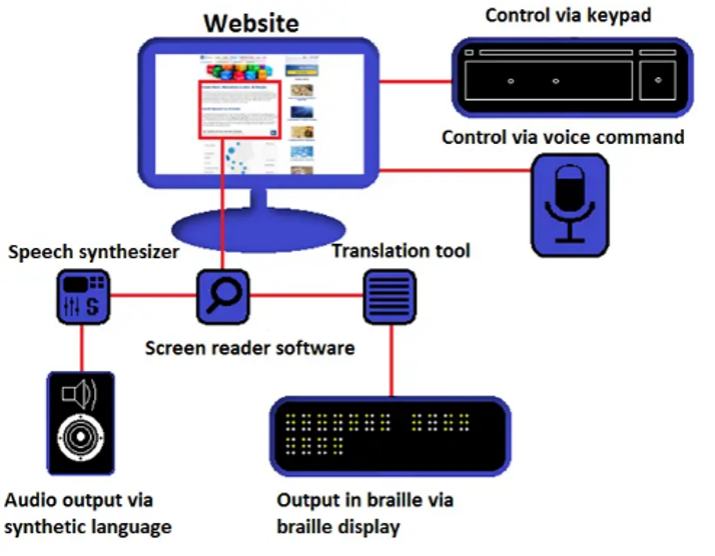
Figure 2: Diagram of Screen Reader Technology
Source: IONOS. (2023)
If assistive technologies cannot distinguish between real and AI-generated content, the user might be left in an AI-generated reality. Without the visual cues that sighted users might depend on, BLV users cannot determine the authenticity of the content they are consuming. Research by Alharbi et al. (2024) reveals the occurrence of AI failures among BLV individuals regularly. However, in an attempt to overcome these issues, one of the strategies adopted by the BLV community is to use various verification techniques, such as checking data from different assistive technology applications or even getting help from sighted peers.
“[intelligence-enabled visual assistance technologies] are fun. Just play with it. Do not rely on them.
Find their strengths and weaknesses” – Blind Participant P20
“Make sure that you are not testing it on something that is going to impact your life in a negative way
if the information you get is incorrect.” – Blind Participant P24 (Alharbi et al., 2024)
For BLV individuals who live alone, this misalignment between current technology and user needs makes things much harder for them. Without access to a sighted peer to confirm whether an image description is real or a hallucination, they are left vulnerable to misinformation, scams, or safety hazards. Furthermore, even though some BLV individuals have a sighted peer accompanying them, support from sighted people may be unavailable in many situations, which means many BLV individuals are vulnerable in their ability to make decisions about their surroundings. This issue is further compounded by the fact that sighted people can misidentify AI-generated content. As previously mentioned, this problem is substantially more pronounced in the BLV community, since even when assisted by a sighted peer, the guidance provided may still be incorrect.
Technical Solutions
In order to mitigate the digital blindness problem in the BLV community, there should be initiatives to develop methods for assistive technologies to accurately identify AI-generated content. This can be achieved by providing some type of information to let the tool immediately notice that the content is AI-generated. As a result, the system needs to know the verifiable records of the content, which is called provenance. Provenance acts as an information bridge between the digital content and the assistive tool, providing information to authenticate files origin.
To make sure that this kind of authentication is reliable, one effective method for ensuring that this provenance remains permanent is signal-level provenance, such as robust digital watermarking techniques, which integrate provenance data directly as a part of the content itself. This technique often remains undetected by humans while remaining identifiable by specialized software, whether within the pixels of an image, the sound waves of an audio file, or the token sampling patterns of text. Notable examples of this technique include SynthID, developed by Google DeepMind, and Digimarc. (see Figures 3-4)
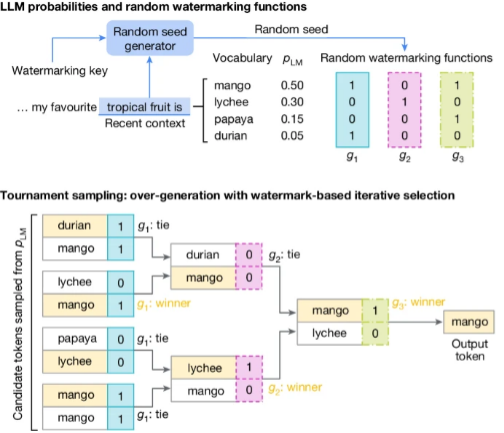
Figure 3: SynthID-Text’s Tournament-based Watermarking
Source: Dathathri et al. (2024)

Figure 4: Comparison of SynthID Watermarked (Left) and Non-Watermarked (Right) Images
Source: Google DeepMind. (2023)
The advantage of signal-level provenance is that it survives attacks such as degradation, compression, and cropping. It is also very hard to delete. As illustrated in Figure 5, the embedded signal can still be detected and verifiable by the designated software. Moreover, watermarking techniques have evolved over time from traditional image watermarking to modern AI-generated content. (see Figures 5-6)
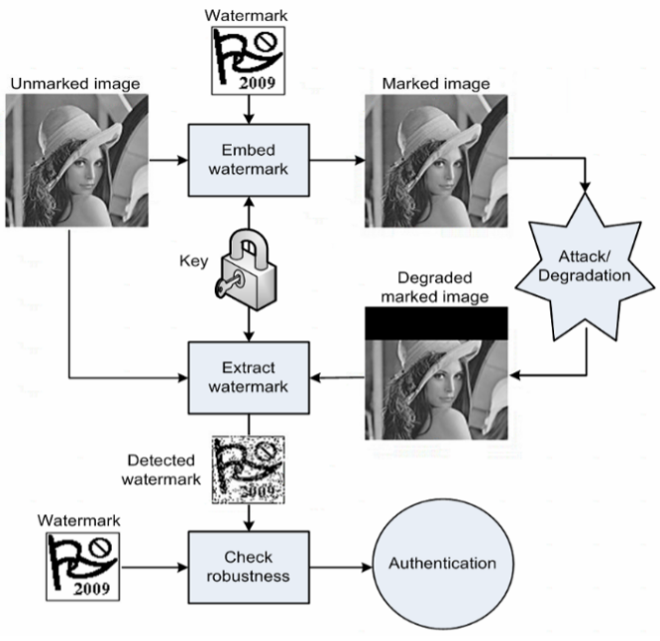
Figure 5: (Traditional) Digital Watermarking Flowchart
Source: Jovanović. (2009)
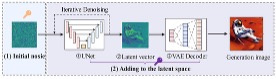
Figure 6: (AI-Generated Content) Watermark Placement with Stable Diffusion Model, including adding to the (1) Initial Noise or (2) Latent Space
Source: Luo et al. (2025)
However, the most important aspect is that, since designated software is used to identify the watermark, a compatible protocol standard must be established for smooth functionality. For example, SynthID utilizes its own creation and verification mechanisms which might not be identifiable elsewhere, making it a huge barrier for third-party tools and software.
Apart from the signal-level provenance technique, cryptographically signed metadata can be used as a file-level provenance, functioning like an attachment to the file upon creation or export and effectively acting as a digital stamp that tracks a file's history throughout its lifecycle. While it provides detailed file history attribution, it is fragile as it works like an attachment to a file which could be easily stripped or lost when content is shared on social media, screenshotted, or converted between formats, like a document with a paper clip attachment that can fall off during transport or could be damaged by other means. This technique, especially the C2PA standard (see Figure 7), has been widely adopted across platforms such as Adobe Photoshop, OpenAI’s DALL-E 3, and other major camera manufacturers. Furthermore, as it is embedded only into the file's data structure, BLV individuals using assistive technology must have their software read the data directly from the file and have their tool protocol align with them to detect it.
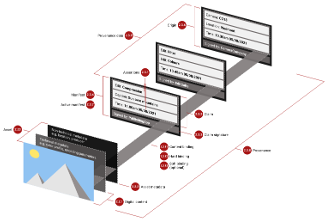
Figure 7: Elements of C2PA
Source: C2PA. (2025)
Technical Standard Recommendations
It is important to consider that both methods share a fundamental requirement for their functionality, which is the protocol standard implementation. Both file-level provenance and digital watermarking rely on platforms and assistive technologies agree to implement similar standard creation and detection tools, compatibly working together to ensure that provenance information is consistently read, preserved, and announced to the user.
On the other hand, when considering whether the signal-level provenance or file-level provenance standard should be used, the most comprehensive strategy is the standard implementation of both provenance systems. Specifically, utilizing them as a multi-layered approach on every platform and device allows their strengths to complement one another, as signal-level provenance is difficult to delete or alter, while file-level provenance provides detailed history tracing.
However, since a multi-layered approach may be costly and not feasible in some scenarios, signal-level provenance should be considered over file-level provenance, as signal-level provenance can be interpreted by assistive technology even when a user does not have direct access to the original source file.
Conclusion
The indistinguishability of AI-generated content creates a challenge to the digital autonomy of the BLV community. As the ability to distinguish between human and AI-generated content becomes impossible for the human senses, provenance data serves as the information bridge that allows assistive technologies to function effectively. While file-level provenance provides a detailed history record of a file, it is vulnerable to being lost during file alterations or transfer and requires assistive technology to have access to the file, which makes it an incomplete safety measure for accessibility, whereas signal-level provenance has the advantage of resistance to deletion and alterations. So, considering accessibility as the main objective, both provenance methods should be implemented together as a multi-layered approach that allows their strengths to complement one another.
Ultimately, a universal standard is required to enable platforms and assistive technologies to function effectively for BLV individuals. As these measures are implemented, not only will the BLV community benefit from this initiative, but it will also be beneficial for everyone and could help create a safer digital space, promoting digital transparency and inclusion for all users.
Mr. Kanchanabhadra Sai-sook
Digital Intelligence Strategy and Policy Department
Digital Economy Promotion Agency
References


