
“The smallest feline is a masterpiece.” — Leonardo da Vinci
Let me tell you, dear reader, I have no idea what was on Leonardo’s mind when he said this. All I know is that I agree with him on this matter. I do not know if he had cats, nor did I see any of his famous paintings portraying his cats. I do not have cats or dogs, but like most sane individuals, I love them and cannot restrain the urge to pet them when I see one lying around. Every second scrolling down my social media feed has been occupied by pictures or videos of these fluffy animals. Whether it is how they look or how they behave, their charm is quite a mystery and is the topic for today. I will try to explain why we find these adorable creatures so endearing, as well as their practical exploits that you see on a daily basis.
One thing we can all agree on is that we love cats and dogs for inexplicable reasons. Konrad Lorenz, an Austrian zoologist, ethologist, ornithologist, and Nobel Prize winner, proposed the idea of “kindchenschema,” or “baby schema” in English, which refers to the set of physical features perceived as cute and which prompt caretaking behavior in others. This is an evolutionary function to ensure that we take care of our babies. Baby schema includes a large head, round face, high and protruding forehead, big eyes, and a small nose and mouth. You could say this is the definition of cuteness, and we find these features in babies. But does this hold true if these features are not on the face of a baby? The short answer is yes. Borgi et al. have studied the effect of baby schema in cats and dogs and confirmed that the effect is not limited to just human faces; animal faces can reproduce this phenomenon as effectively as human faces. You could say that the reason we love cats and dogs is because of an instinctive feeling shaped by evolution, or in other words, we are programmed to do so.
I do not know if it is the same for you, but the social media algorithm did me a favor by presenting me with a lot of cat videos. As a catless cat person, social media is the only channel where I can get my dose of their cuteness. Luckily, pets on social media are becoming more prevalent. A survey by Mars Petcare in 2016 showed that 65 percent of pet owners post about their adorable critters on social media, on average, twice a week. One in six said they have created a separate social media account for their pet, and most pets' accounts get more attention than their owners' do (no surprise). One-third said they post about their pets as much as they do about their (human) family, and 13 percent said they post about their pets even more than their family. With these kinds of results, you might think that pet owners only care about their own pets, but no, 30 percent of pet owners do follow famous animals on social media, and some of these pet celebrities seize the attention of millions. Beyond social media, even other digital spaces like online games or live-service games make money from pet companions, which do not always look like normal animals but function like normal cats or dogs, nonetheless, being costly and providing emotional support.
No wait, I have to correct myself here. Cats and dogs aren't always just there being costly and providing emotional support. I have already mentioned pet celebrities or pet influencers. For these kinds of pets, they are more likely to pay for their own food and even their owner's meal sometimes. Lu et al.'s study showed that consumers respond more positively to hotels, restaurants, and tourism reviews when social media posts are written from a pet’s point of view. Later findings by Martina et al. also showed that pet influencers are seen as more credible than human influencers, especially for pet-related products, because cuteness equals credibility for some reason.
This reminds me of a psychological phenomenon called the Halo Effect. The Halo Effect is a type of cognitive bias where our impression of something or someone influences how we perceive their specific traits. It's like thinking, "She is so beautiful; she must be kind too," or in this case, "The dog is so lovely; he must be very credible too." When we look at it from this perspective, it seems like cuteness in pets has the same effect as beauty in people, and yeah, cuteness increases credibility, at least according to the Halo Effect. So, if you are choosing an online influencer to advertise your product, maybe picking dogs over people is not such a bad idea.
As far as I know, cats and dogs cannot use social media—they cannot even talk! So, when these pet celebrities reply to your comments, there has to be someone shady acting as their proxy. Most of the time, it is the owner. You know the saying, "Teamwork makes the dream work." Both pets and their owners have to work together to achieve their dreams, followers, and, often, income. The pets do their part by being adorable. The question is, what should the owner do? First things first: the username or account name. This is how your account gets discovered on social media, so it is crucial to make it memorable and easy to find. Next is engagement. Being active on social media—commenting, sharing, and regularly interacting with followers—will definitely boost engagement. Just posting content alone will not be enough. Have you heard of personal branding? This is the next thing you need to build on for your pet. Cats and dogs generally do not care about their image on social media, so you have to do it for them. Present your pet’s personality, what is on their mind, and how they would react to different situations. An innocent dog might be universally loved, but people often adore a grumpy cat as well. Lastly, if your follower base is high enough, sponsors will come knocking. Partnering with brands is a surefire way to make some cash for most pet influencers. This usually generates consistent income as long as you can maintain your audience, so measuring your account’s performance is really important. If you can do all these things, I will probably find your pet on social media in no time!
And that should be enough ranting on my part. Here is a random cat I found on the internet. Bye.
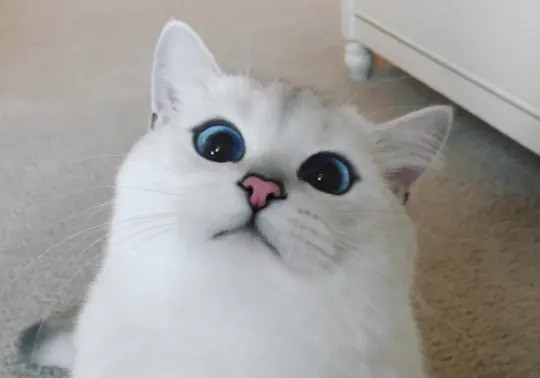
Coby The Cat: https://www.instagram.com/cobythecat/
Thaya Navanugraha
Digital Intelligence Strategy and Policy Department
Digital Economy Promotion Agency
References


